https://thesis-masters.store/wp-admin/post.php?post=168&action=edit
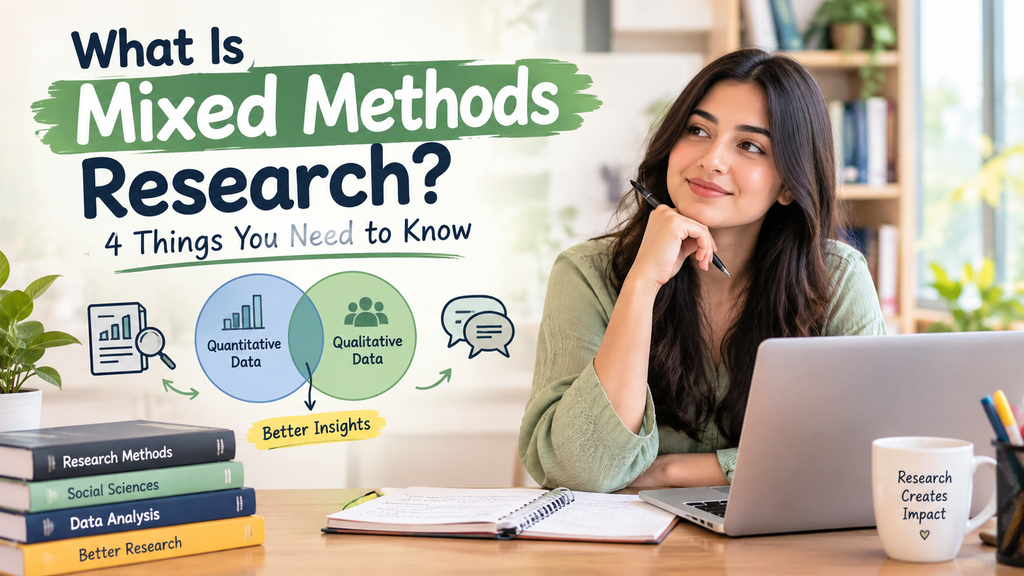
Four Points About What Integrated research methodology Is
So, I’m just going to kind of run through some of the basic ideas. Four points about what mixed methods research is. Hopefully you’ll find this informative and educational and learn a little bit about mixed methods research.
What Kind of Evidence Do We Use
We might start with the broader question of, What kind of evidence we use to study the problems today in the social sciences. In education and in the health sciences, I think we can draw some clues from looking at recent documentaries.
Shane Battier: A Well-Known Basketball Player
We can find it also in the sporting world today, when we look at the evidence. For example: there’s this well-known basketball player in the United States. Shane Battier, he was as a seventh grader, the fourth best in the nation. He graduated from high school, he was considered the best, he went on to a very illustrious college career.
Looking at His Statistics on How He Performed
Now when he went into the professional basketball and people began looking at his statistics on how he performed. He didn’t score many points, really snag many rebounds, stole a few balls, really dished out few assists, but yet his team was winning.
A Greater Understanding of Shane’s Potential
When they started bringing in qualitative information, such as looking at how he blocked the opponents’ vision. How he looked at whether the players drove left or right. He talked to teammates and how he talked to teammates. The qualitative evidence that begins to supplement or augment the statistical evidence, to have a greater understanding of Shane’s potential.
Hurricane Sandy and New York City
We see this too in everyday events that are portrayed in the media. Such as the stories about Hurricane Sandy and New York City. Where we get the passionate, tragic stories of individuals who’ve lost property, and some have lost lives. Those are then presented alongside the newscasters that show the statistics about Hurricane Sandy and give us the numeric information. Again we have stories and numbers being portrayed in the media.
An Emerging Blended research methodology
This leads to mixed methods research, which in the simplest way of thinking about it. Is just simply putting together the stories of people’s lives as well as the numbers. The statistics of what occurs, it’s an emerging mixed methods approach in the social and health sciences.
A More Complete Understanding of Our Research Problem
It combines both these statistical trends and the stories, people have developed a complete methodology around this concept. The whole idea is that combining both statistics as well as. The stories gives us a more complete understanding of our research problem and just one by itself.
Four Key Features of Combined research method
I want to go through now four key features that really illustrate to me what mixed methods is all about. First of all, it’s collecting and analyzing both qualitative and quantitative data. Using rigorous approaches in collecting those methods. Combining the two forms of data, and then perhaps framing it within a broader framework. What I’m, gonna do now is take each one of these four points . I’m going to break them down and talk about them specifically.
What Mixed Methods Is Not
It’s helpful too. To think about what mixed methods is not. Because there’s a lot of commentary out there about what mixed methods is. What it is not, here’s some of my thoughts about what it’s not. It’s not simply just using the name mixed methods without the more rigorous procedure in research methodology. People do that, they drop in the term such as grounded theory. They really don’t have the rigorous procedures behind it.
More Than Just Having Both Forms of Data Available
It’s more than just having both quantitative and qualitative data available. Also more than just gathering both forms of data and analyzing them separately without bringing them together. It’s not just gathering multiple forms of qualitative data or multiple forms of quantitative data. There’s a term for that in the literature called multi-method research.
A Larger Picture of Doing Research
let me go through these four points. First of all, what does it mean to collect and analyze both qualitative and quantitative data. We need to view data as part of a larger picture of doing research. It’s the type of information we gather and analyze to answer our questions.
Just One Step in the Process
It’s then framed within larger questions and framed within larger philosophical assumptions of doing research. So my focus is gonna be on how we treat that data. How we combine it, integrated in mixed methods research. But we need to recognize it as part of a larger approach to doing research. It’s just one step in the process.
Certain Different Assumptions That Are Operating
Now, when you gather quantitative data and qualitative data. There are certain different assumptions that are operating. Two different forms of gathering evidence, quantitative data is usually predetermined by the researcher. Is based on instruments we gather, those instruments measuring performance. Attitudes, observations, we then do statistical analysis and we make an interpretation.
An Emerging Methods, Very Broad
Qualitative has the different type of methods going on. It’s an emerging methods where we don’t necessarily start with a predetermined instrument. We ask very open-ended questions and often conduct interviews and observations. Look at documents, we might look at email messages. We might listen to sounds, the range of qualitative methods that are collected. data that’s collected is very broad.
What Theme or Patterns Emerg
Then we take that information and we analyze it. I say we analyze text or image data and we build up. A picture of what theme or patterns emerge from talking to people. So I see the methods for quantitative and qualitative being very different and having distinct features.
Both Methods Have Advantages
Now, both methods have advantages. Take quantitative research for example, it’s really useful for studying large numbers of people across a wide geographic area. It’s a very efficient method of data collection, we can start looking at the relationship among concepts or variables.
A Downside to Quantitative Research
We can even look at whether something causes something. Cause and effect, we can control for bias carefully. People tend to like numbers, but we also know there’s a downside to quantitative research. It tends to be impersonal, dry. We really don’t hear the words participants often. We don’t go out to the actual setting where things are occurring, it’s largely driven by the researcher.
Building the Perspective Up From the Views of Participants
Now qualitative research has some distinct themes just too. We can hear those detailed voices of people. We can understand their experiences and their actual settings where things are occurring. Your whole idea in qualitative is to build the perspective up from the views of participants. Not from the researcher’s perspective. So it’s more realistic and people like stories.
Some of Its Limitations
Some of its limitations. Well, it often draws on small samples. So we can’t really apply it across a large number of people. It’s also highly interpretive, and it also relies on the researcher’s interpretation. To make sense of these stories that individuals provide.
Multiple-method research Secondly Is Rigorous
So mixed methods secondly is rigorous, what constitutes a rigorous quantitative study and a rigorous qualitative study. We need to attend to different perspectives about design. Such as using a design procedure, in quantitative this will mean experiment or correlation or survey. Whereas in qualitative it might mean using a design such as ethnography, grounded theory, phenomenological study.
Multiple Forms of Data Collection
We also need to attend to how we collect the data. From sites, permissions. A systematic or a purposeful sampling, an adequate N. Or number of people that we study, we need to have multiple forms of data collection. We need to go through a rigorous procedure of analysis of the information.
A Scientific Form
Whether it’s a statistical analysis such as descriptive. Inferential, using statistical packages. On the qualitative side, whether it’s using qualitative software package. Then building from the codes to the themes to the larger perspectives. So we need some rigorous methods when we do mixed methods research that gives it more of a scientific form.
We Need to Integrate These Two Forms of Data
Third: This is maybe one of the most important and one of the most confusing parts of mixed methods research. We need to integrate these two forms of data. We need to bring the qualitative and the quantitative together. Now there are some designs out there in the mixed methods field that have emerged. And these have developed over maybe the last 20 years.
The Convergent Design
The first one we call a convergent design. Basically what we’re going to do here is we’re going to collect quantitative data. Analyze it, and at the same time we’re gonna collect qualitative data and analyze it. So the quantitative might be a survey, the qualitative might be an open-ended interview with some people.
Merge the Data, Bring It Together
We’re gonna gather these two databases and then we’re actually going to merge the data. Bring it together. And basically we’re going to compare the results to see .When we ask people questions and talk to them. As in qualitative, and we gather information on instruments. Whether the results from these two databases merge and are comparable, that’s a convergent design.
The Explanatory Sequential Design
The next is an explanatory sequential design. It’s a very popular one in the social sciences and health sciences. We’re gonna start by collecting quantitative data, analyzing it. And then from those results we’re then going to build in a second qualitative phase where we follow up. So the whole idea in this design is to interpret the quantitative results using the qualitative data.
Reversing to an Exploratory Design
Now we can reverse this and we have an exploratory design. Where we’re gonna start not quantitatively but we’re gonna start qualitatively. So we start with the qualitative data collection. We explore and come up with findings, we then use those findings to then follow up with a quantitative phase.
Qualitative Exploration Leading to a Quantitative Test
For example: We might use qualitative findings to develop a new instrument. Because there aren’t existing instruments out there to measure a certain phenomenon with a population. So, this is a good design for that, so I call it qualitative exploration then leading to a quantitative test.
Moving Beyond the Three Basic Designs
Now there’s one more step, we can move beyond these three basic designs to more what we call advanced designs. So within a basic design we can add to it. Think about a basic design that we’re then going to surround it with a more advanced design. We’re gonna put some more features into it.
An Experiment, a Case Study, a Theoretical Model
For example, we might do an experiment within which the conversion design is used. We might do a case study. We might use a theoretical model. Social change model for example, we might use a social science theory model. One of the popular approaches here is to do an experiment and within that to use a convergent basic design. Where we gather both quantitative and qualitative data and bring them together.
Community-Based Participatory Research
Another one would be to use a social science theory that surrounds an explanatory sequential design. So the theory that kind of guides the entire study. It provides a framework for which we then start quantitatively and follow up qualitative. Another popular one that’s emerging is a community-based participatory research. That’s a framework for engaging the community and getting them involved in decisions throughout the research process. We might use that in an exploratory sequential design.
Four of the Basic Ideas of Multi-method research
So those are four of the basic ideas of what mixed methods research is. It’s collecting and analyzing qualitative and quantitative data. Using rigorous procedures, combining or integrating both forms of data. And then framing, often framing these designs within a larger perspective. Such as an experiment of theory, or a community participatory research approach.
